Introduction: Buddhism Is Not About Escaping Life, but Awakening Within Life
Many people imagine Buddhist practice as something that requires leaving society, living in a monastery, or spending hours performing religious rituals.
However, the Buddha’s teachings were never meant to separate us from ordinary life.
The true practice of Buddhism happens in the middle of life itself — in our relationships, our work, our struggles, and our daily choices.
The Buddha discovered that suffering does not come only from external circumstances. Much of our suffering is created by the way we perceive reality, cling to expectations, and react to our thoughts and emotions.
Therefore, Buddhist practice is not about escaping the world.
It is about learning how to meet the world with greater awareness, wisdom, and compassion.
The kitchen, the workplace, the family, and even difficult moments can all become places of practice.
In Buddhism, this means transforming everyday life into a path of awakening (Bodhi).
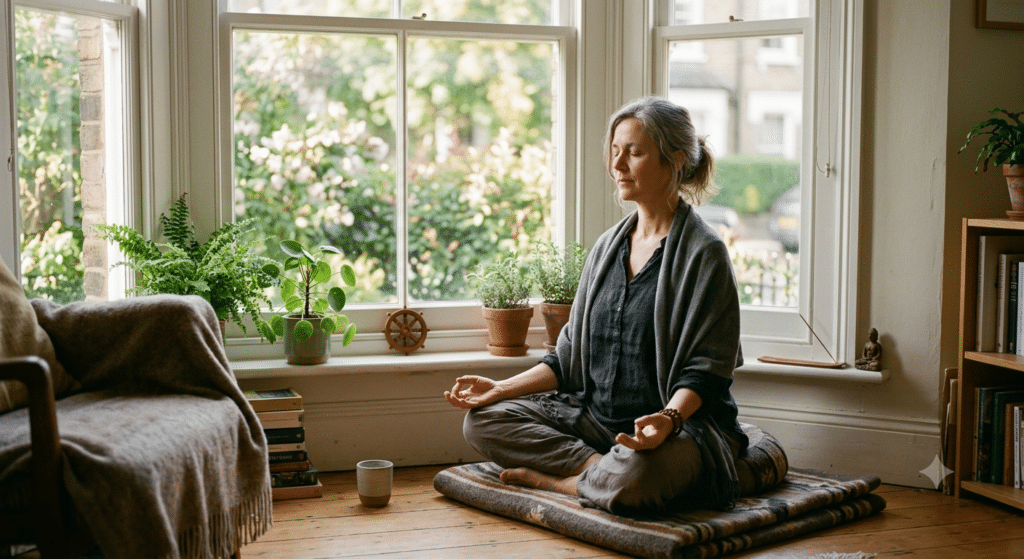
1.See Daily Life as Your Practice Ground: The World Is the Place of Awakening
A famous teaching from the Zen tradition says:
“The Dharma is found within the world; awakening does not exist apart from ordinary life.”
This idea reflects a central Buddhist insight: every moment of life can become an opportunity for practice.
You do not need to wait for a perfect environment to begin your spiritual journey.
Simple activities can become forms of mindfulness:
- Washing dishes with full awareness.
- Listening carefully when someone speaks.
- Walking while noticing each step.
- Working with patience and concentration.
- Responding to difficulties without immediately reacting.
These ordinary moments become a form of meditation because they train the mind to stay present.
The purpose of Buddhist practice is not to create a separate “spiritual life” apart from reality.
Instead, it is to bring awareness into every aspect of life.
When we stop fighting with the present moment and begin observing ourselves clearly, daily experiences become opportunities for inner transformation.
2.Let Go of External Attachments and Return to Inner Clarity
Many people begin spiritual practice by searching for external forms:
- special clothing,
- religious objects,
- complicated rituals,
- perfect meditation techniques.
These things can be meaningful, but Buddhism teaches that external forms alone cannot create true peace.
The Buddha emphasized that liberation comes from transforming the mind.
The real obstacle is not the world outside us, but our attachment to it.
In Buddhism, attachment is connected with Kleshas — the mental afflictions that disturb our inner peace, such as:
- greed and craving,
- anger and resentment,
- ignorance and misunderstanding.
These inner patterns cause us to constantly chase what we want and resist what we dislike.
True Buddhist practice means learning to see these patterns clearly and gradually becoming free from their control.
This does not mean rejecting life.
It means enjoying life without being completely dependent on changing circumstances.
When we release excessive attachment, we discover a deeper sense of stability and inner clarity.
3.Practice Mindfulness: Observe the Mind Without Being Controlled by It
One of the most important practices in Buddhism is Sati, often translated as mindfulness or awareness.
Mindfulness means learning to observe our thoughts, emotions, and reactions with clear awareness.
In daily life, we often become trapped by our own minds.
A single negative thought can create anxiety.
A painful memory can influence our entire day.
An angry emotion can lead us to say things we later regret.
Buddhist mindfulness teaches a different approach:
Do not suppress your thoughts.
Do not blindly follow them.
Simply observe them.
When anger appears, notice:
“This is anger arising in my mind.”
When anxiety appears, notice:
“This is a feeling of fear and uncertainty.”
By creating this space between awareness and reaction, we gradually gain freedom.
The thought is no longer the master.
The emotion is no longer the master.
Awareness becomes the foundation of inner peace.
This process is closely related to Vipassana meditation, the practice of seeing reality clearly through direct observation.
4.Develop Wisdom Through Buddhist Teachings: Transforming Suffering Into Insight
Mindfulness helps us observe our experiences, but wisdom helps us understand them.
In Buddhism, this wisdom is known as Prajna — the deep insight that sees the true nature of reality.
Many of our struggles come from misunderstanding impermanence (Anicca).
We want things to remain the same:
- relationships,
- success,
- youth,
- comfort,
- our own identity.
However, everything changes.
When we resist this truth, we create unnecessary suffering.
Buddhist teachings and classic texts such as the Heart Sutra and the Diamond Sutra explore these deeper insights.
They teach that many things we consider permanent are actually constantly changing and dependent on conditions.
This understanding does not make life meaningless.
Instead, it allows us to appreciate life more fully.
When we understand impermanence, we can love without possession, experience without clinging, and face change with greater peace.
5.Transforming the Heart: From Self-Centeredness to Compassion
The goal of Buddhist practice is not simply personal relaxation or temporary happiness.
Deep Buddhist practice leads to a transformation of the heart.
As wisdom grows, compassion naturally develops.
In Mahayana Buddhism, this awakened intention is called Bodhicitta — the aspiration to awaken not only for oneself but for the benefit of all beings.
When we see that all beings experience suffering, fear, and uncertainty, compassion becomes a natural response.
A person who practices Buddhism deeply does not become disconnected from society.
Instead, they become more present, patient, and caring.
They bring wisdom into relationships.
They bring kindness into conflicts.
They bring awareness into ordinary moments.
Awakening is not an escape from life.
It is a deeper way of participating in life.
Conclusion: Finding Peace Through the Practice of Awareness
Practicing Buddhism in daily life does not require becoming a monk or abandoning the modern world.
The Buddhist path begins exactly where we are.
Through mindfulness, ethical living (Sila), wisdom (Prajna), and compassion, we gradually transform our relationship with ourselves and the world.
We move:
- from reaction to awareness,
- from attachment to freedom,
- from confusion to wisdom,
- from suffering to inner peace.
The deepest teaching of Buddhism is that peace is not something we must find somewhere else.
It is something we uncover when the mind becomes clear, compassionate, and free.
Every ordinary moment can become a step on the path of awakening.
Buddhism Special Topic Buddhism