If a person has already lived a happy life,
must they still feel unfortunate about death?
I have been so blessed.
My family loves me. They offer me delicate, caring relationships,
while also respecting healthy boundaries.
I have a few friends with whom I can truly talk from the heart.
When a person has completed a period of cultivation,
when they have finished a journey,
what is there to be so sad about?
So what is truly tragic—
death itself,
or living without ever learning how to please and fulfill oneself?

Is Viewing Death as Something Joyful a Sign of Higher Understanding?
Perhaps seeing death as something joyful
is not a sign of disrespect for life,
but rather a perspective that comes from a deeper understanding
of the value of life and the meaning of emotional connection.
Because when one fully understands the value of life,
some people are indeed able to face death more calmly.
Life is the most precious gift each person possesses.
It cannot be duplicated,
and we never know when it will end.
If you have lived happily,
if you carry few regrets,
then perhaps, for life,
death is simply:
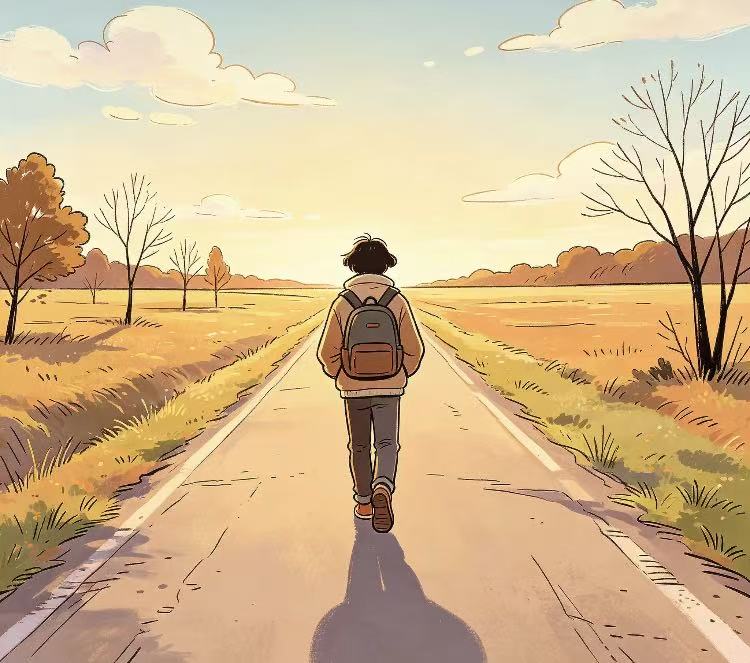
the end of a journey.
Does Death Really Mean the End of Emotional Bonds?
In common understanding,
death represents emotional rupture and pain.
It means saying farewell forever to family and friends—
a loss that feels impossible to repair.
For those who remain,
losing a loved one can be profoundly painful.
This pain does not come only from separation,
but also from cherishing memories of the person who has passed
and from uncertainty about the future.
But we might ask ourselves:
Is this pain truly caused by death itself?
Or is it because, while we were alive,
we did not fully cherish the time we had with those we love?
These bonds are destined to end one day.
The problem is not that death removes the bond,
but whether we honored that bond while it still existed.
So perhaps what matters most is not fearing loss,
but making the most of our relationships
while we still have them.

We might occasionally ask ourselves:
Do I have regrets?
Have I truly fallen in love?
Have I tasted the foods I have always wanted to try?
Have I experienced rejection?
Have I felt the quiet joy of unexpected success?
If these things have never happened,
death can feel especially heavy.
Because what is lost then
is not only life itself,
but also:
the life that never had the chance to happen.
Is Regret About Death Really About Not Contributing Enough to Society?
Many people believe
that the value of life lies not only in existence itself,
but in the contributions we make to others and to society.
To use limited time
to create limitless value.
This idea sounds noble,
but upon reflection, it may not be entirely true.
Because first and foremost,
a person lives for themselves.
The value of life includes
both contribution to society
and personal experience of living.
The two are not in conflict.
Here is a short poem that captures this feeling:
Fate renews itself in cycles.
What once felt profound gradually becomes simple.
One day, we will all quietly accept everything.
Amid joy, anger, attachment, and desire,
a person always turns inward to care for themselves.
In the end, what we reach
is simply a clearer vision of who we are.
Some great scientists, entrepreneurs, and political leaders
may have reached the highest peaks of achievement,
standing at the forefront of their time.
Yet they were often carried forward by the currents of history.
Across the long span of their lives,
were they truly happy?
Perhaps there is no single answer to that question.

Why Talk About Death at All?
Talking about death
is, in fact, a way to better understand life.
As many have said:
We talk about death in order to live better.
When we learn to view death with balance and clarity,
it can become a source of motivation—
encouraging us to cherish the present
and to live more intentionally.

Death can be faced calmly, even lightly,
not because death itself is something to celebrate,
but because:
life has been lived with sincerity.
If a person has lived happily,
maintained meaningful relationships,
and carries no major regrets,
then death is no longer a failure,
nor a loss.
It is simply:
the end of a journey.
What truly brings sorrow
is often not death itself,
but:
not having truly lived,
not having truly loved,
not having truly shared life with others.
The purpose of reflecting on death
is ultimately
to live better.
Facing Death with Peace
If one day I leave this world,
I hope that day will be calm and gentle.
Like the music that plays
at the end of a long journey,
not a heavy farewell.
What Is the Meaning of Life? An Eastern Philosophy Guide to Humanity’s Greatest Question Meaning of Life