At first glance, the fear of death seems simple: we do not know what happens after we die.
The afterlife, if there is one, remains one of the greatest mysteries of human existence. This uncertainty creates what psychologists call the fear of the unknown.
But the fear of death goes much deeper than that.
It is rooted in biology, psychology, and the human search for meaning.
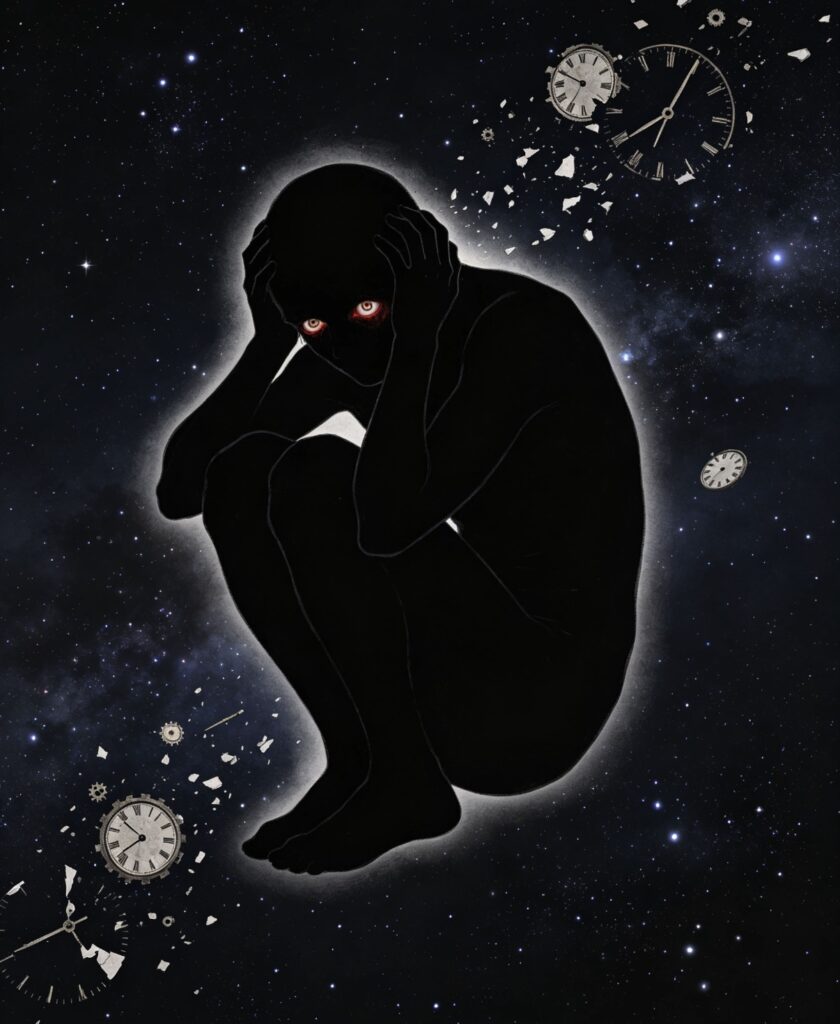
Death Is the Greatest Unknown
Human beings are naturally curious. We explore the oceans, study the stars, and build theories to explain how the universe works. We are constantly driven to understand what we do not yet know. Yet death remains the one experience we cannot fully investigate. No one can answer with certainty: What happens after death? Does consciousness continue? Do we cease to exist completely? Is there another dimension or reality? Because these questions have no definitive answer, death remains the ultimate mystery. And humans are deeply unsettled by anything they cannot predict, understand, or control.
Evolution Programmed Us to Fear Death
From a biological perspective, the fear of death is a survival mechanism. Throughout evolution, organisms that instinctively avoided danger were more likely to survive and reproduce. As a result, natural selection reinforced behaviors such as escaping threats, avoiding injury, seeking safety, and protecting offspring. Humans inherited the same ancient programming. The fear of death is not a defect in the mind. It is one of life’s most fundamental protective systems.
We Fear the End of the Self
What many people truly fear is not death itself, but the disappearance of the self. Death appears to mean that our memories will vanish, our thoughts will stop, our relationships will end, our dreams will remain unfinished, and our sense of “I” will cease to exist. Consciousness naturally assumes continuity. We experience ourselves as ongoing beings. Death confronts us with the possibility that this continuity may end forever. This is one of the most difficult realities for the human mind to accept.
We Fear Losing the Life We Still Want to Live
Many people do not fear death in the abstract. They fear losing the future they still hope to experience. They may want to travel to the Galápagos Islands, paint watercolors in Portugal, meet their future grandchildren, complete meaningful work, or continue experiencing love and beauty. Death permanently closes all remaining possibilities. The more deeply we value life, the harder it is to imagine losing it.
Death Reminds Us That Time Is Limited
Death gives life a deadline. Because our time is finite, we are forced to ask what matters most, what is worth dedicating our lives to, and how we should spend the years we have left. This is why awareness of death leads directly to one of humanity’s oldest questions: What is the meaning of life? Mortality makes every moment more precious.
Many People Fear Suffering More Than Death
When people say they fear death, they are often referring to the process of dying. They may fear physical pain, illness, aging, loss of dignity, and dependence on others. In many cases, the greatest fear is not being dead, but the suffering that may come before death.
Religion Offers Answers to Death
Throughout history, religions have tried to answer the mystery of death. Christianity teaches that the soul may enter heaven. Buddhism teaches that life may continue through rebirth. Islam emphasizes judgment and eternal existence after death. One of religion’s enduring functions is to transform uncertainty into belief and to provide a framework through which death can be understood.
Death Drives the Search for Meaning
Human beings do not only want to survive. We want our lives to matter. Once we realize that we will die, we begin asking whether our lives had meaning, what we will leave behind, whether we used our time well, and what our existence was ultimately for. In this sense, the fear of death and the search for meaning are inseparable.
Why Humans Fear Death: A Summary
Humans fear death because it is the ultimate unknown, because biology programs us to avoid it, because it may mean the end of the self, because it takes away unfinished possibilities, because it reminds us that time is limited, because it may involve suffering, and because it forces us to confront the meaning of our lives.
Final Thought
Perhaps humans do not fear death alone. Perhaps we fear reaching the end and realizing that we never truly lived. The awareness of death is unsettling, but it also brings clarity. Because life is finite, every moment becomes more valuable. Death may not destroy meaning. It may be the very thing that creates it.
Next Article
Yet beneath the fear of death lies another, deeper question.
If mortality gives life urgency and meaning, why do so many people in the modern world still feel empty?
Today, we live longer, safer, and more comfortably than almost any generation in history.
We have instant entertainment, unlimited information, and material abundance beyond what our ancestors could imagine.
And yet, many people still feel restless, disconnected, and unsure why their lives do not feel meaningful.
Perhaps the problem is not that life lacks opportunities.
Perhaps meaning is being consumed faster than we can create it.
In the next article, we explore one of the central paradoxes of modern existence:
Why Do Modern Humans Feel Empty? #1 Meaning Gets Consumed Too Quickly