At its heart, Buddhism has one ultimate goal: to awaken (Bodhi) to the true nature of reality, end suffering (Dukkha), and attain lasting freedom (Nirvāṇa).
Although different Buddhist traditions emphasize different aspects of the path, they all share the same fundamental purpose—to free ourselves from ignorance, attachment, and suffering through wisdom, ethical living, and compassion.
Understanding this goal becomes much easier when we look at the journey step by step.
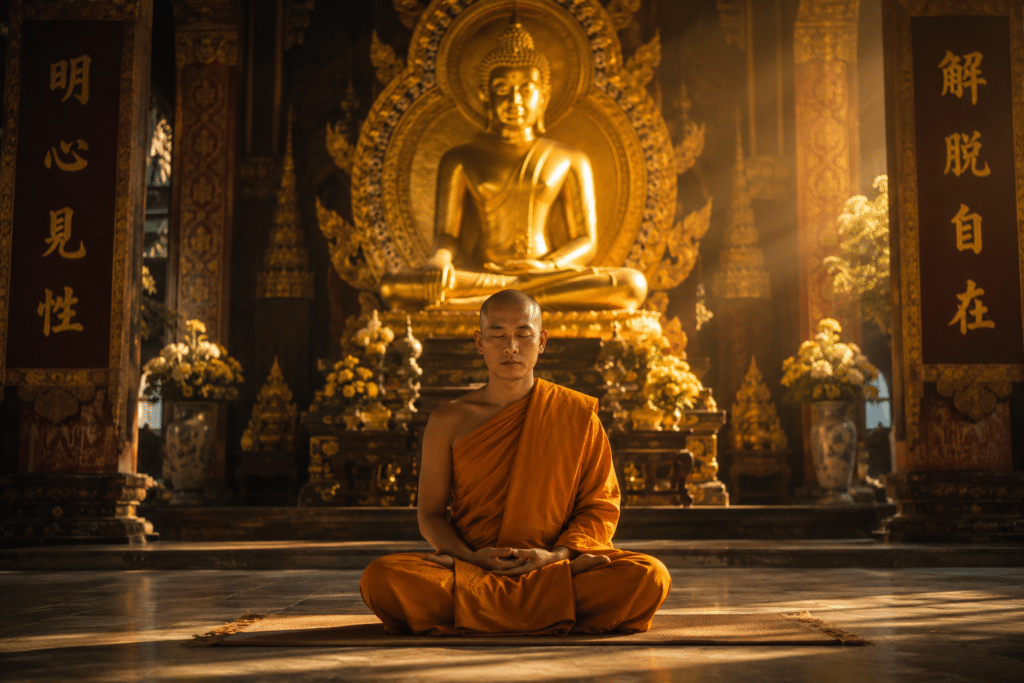
1.The Goal of Buddhism Is Enlightenment (Bodhi)
Many people assume Buddhism is mainly about meditation, kindness, or finding inner peace. While these are all important, they are not the ultimate goal.
The ultimate goal of Buddhism is Enlightenment, known in Sanskrit as Bodhi. Enlightenment is not simply gaining more knowledge or becoming a better person. It is a profound awakening that allows someone to see reality as it truly is.
According to Buddhism, most human suffering comes from ignorance (Avidyā). We mistakenly believe that things are permanent, that possessions and achievements can provide lasting happiness, and that there is a fixed, independent self that must constantly be protected and satisfied.
Enlightenment removes these misunderstandings. Instead of seeing the world through desire, fear, and illusion, an awakened person sees life with wisdom, clarity, and compassion.
This awakening is the foundation upon which every other Buddhist teaching rests.
2.Why Does Buddhism Focus on Ending Suffering?
The Buddha began his teaching with a simple observation: life contains Dukkha.
The word Dukkha is often translated as “suffering,” but its meaning is broader. It includes stress, dissatisfaction, anxiety, frustration, loss, and the feeling that even pleasant experiences never remain forever.
Buddhism teaches that suffering is not caused simply by difficult circumstances. Its deeper causes are craving, attachment, and ignorance.
We become attached to wealth, relationships, reputation, success, opinions, and even our own identity. Because everything changes, clinging to what is impermanent inevitably creates disappointment.
For this reason, Buddhism does not try to eliminate pain by changing the outside world alone. Instead, it transforms the way we understand and relate to reality.
When attachment weakens, suffering naturally begins to fade.
3.Awakening Means Seeing Reality as It Truly Is
A central insight in Buddhism is that everything arises through Dependent Origination (Pratītyasamutpāda)—all phenomena exist because of causes and conditions.
Nothing exists completely independently or permanently.
This understanding leads to one of Buddhism’s most famous teachings: Śūnyatā, often translated as Emptiness.
For many Western readers, the word “emptiness” can sound as if Buddhism teaches that nothing exists. That is not what it means.
Instead, Śūnyatā teaches that all things lack a permanent, independent essence. Everything changes, everything depends on other conditions, and everything is interconnected.
Recognizing this truth gradually loosens our attachment to possessions, status, opinions, and even the idea of a permanent self.
As wisdom deepens, the “Three Poisons”—greed, hatred, and delusion—lose their power over the mind.
This is why Buddhist wisdom is not merely intellectual knowledge. It is a direct realization that transforms how we experience life.
4.Nirvāṇa: The End of Suffering
As wisdom grows, the mind becomes increasingly free from craving, anger, and ignorance.
This freedom is called Nirvāṇa.
Nirvāṇa is often misunderstood as heaven, paradise, or simply death. In Buddhism, it means something very different.
Nirvāṇa is the complete extinguishing of the mental fires that produce suffering. It is a state of profound peace, freedom, and clarity that is no longer controlled by attachment or fear.
Rather than escaping the world, an awakened person lives within it with extraordinary equanimity, wisdom, and compassion.
This inner freedom is considered the highest realization in Buddhism.
5.Compassion Naturally Arises from Wisdom
Although wisdom leads to liberation, Buddhism never separates wisdom from compassion.
As practitioners realize the interconnectedness of all beings, they naturally develop Mahākaruṇā (Great Compassion).
Many Mahāyāna Buddhist traditions express this ideal through the famous phrase:
“Great compassion without conditions; seeing all beings as one.”
Rather than viewing others as separate individuals competing for happiness, awakened practitioners recognize that everyone experiences fear, attachment, loss, and suffering.
Helping others is therefore not simply a moral obligation—it becomes a natural expression of wisdom itself.
For this reason, compassion is not separate from enlightenment. It is one of enlightenment’s clearest expressions.
6.Freedom from the Cycle of Rebirth
Buddhism teaches that beings wander through Saṃsāra, the continual cycle of birth, death, and rebirth driven by karma and ignorance.
As long as greed, hatred, and delusion remain, this cycle continues.
The ultimate liberation from Saṃsāra comes through awakening.
This does not mean escaping life in a negative sense. Rather, it means becoming completely free from the causes that generate suffering and repeated rebirth.
In Mahāyāna Buddhism, many practitioners also follow the Bodhisattva ideal—postponing their own final liberation in order to help countless other beings awaken as well.
Conclusion
The goal of Buddhism is far more than becoming calm, positive, or morally good.
Its ultimate aim is awakening (Bodhi)—a complete transformation of how we understand ourselves and reality.
This journey begins by recognizing suffering (Dukkha), continues by overcoming attachment and ignorance through wisdom, culminates in the peace of Nirvāṇa, and naturally expresses itself through boundless compassion for all beings.
In the end, Buddhism teaches that true freedom is not found by controlling the world around us, but by awakening the wisdom that has always been capable of seeing reality clearly.
Buddhism Special Topic Buddhism